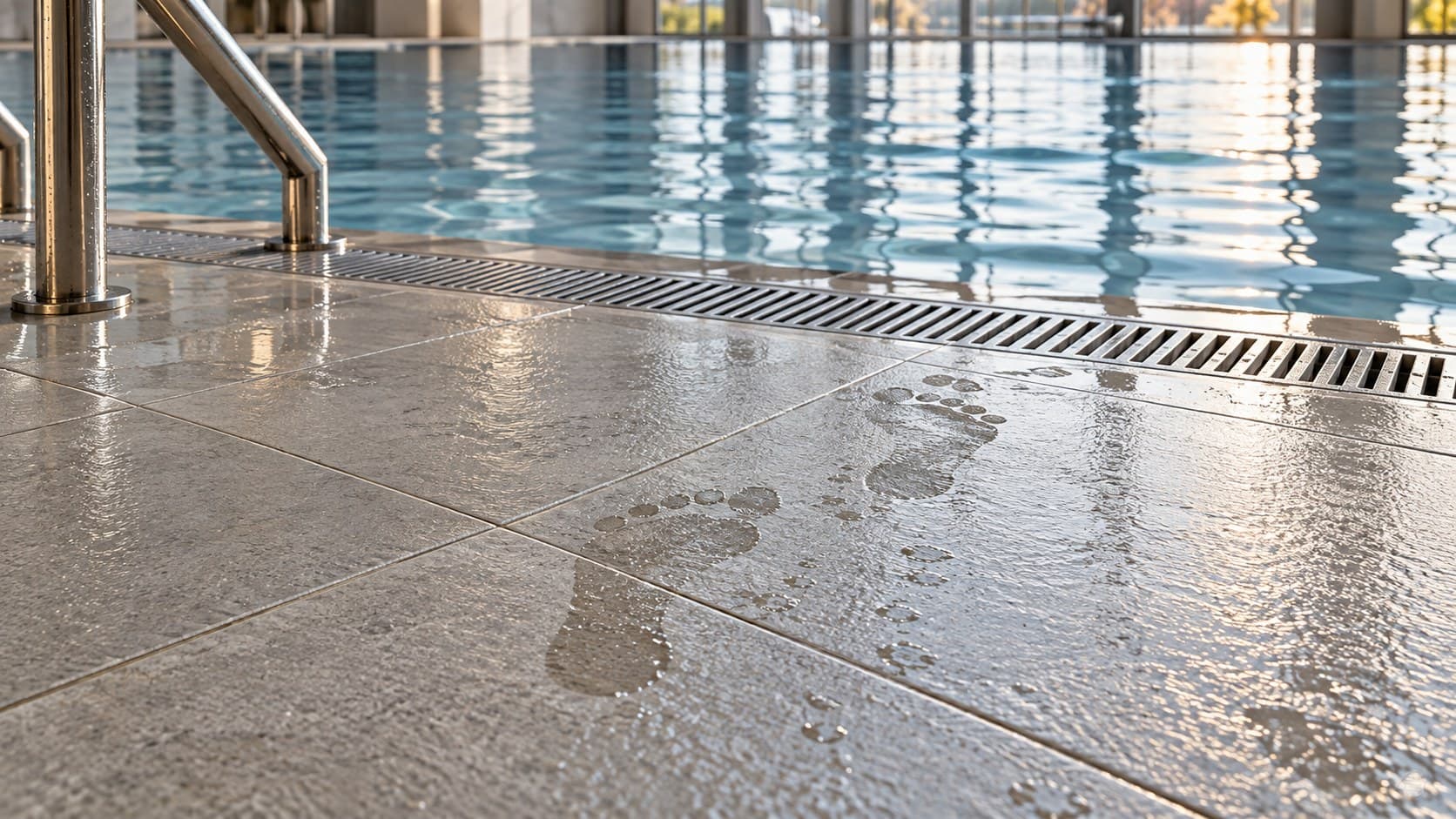
Key points
- Pool areas are rooms exposed to water: the ITB guidelines require at least 36 PTV there, dry and wet.
- Tiles for barefoot areas are rated A, B or C (DIN 51097), but that is a laboratory result for new material.
- Pool decks get slippery through limescale, soap residue and maintenance coatings - deep cleaning can often restore grip.
- The anti-slip treatment is chosen for the tiles and the cause of slipping, keeps their look, and a PTV test confirms the effect.
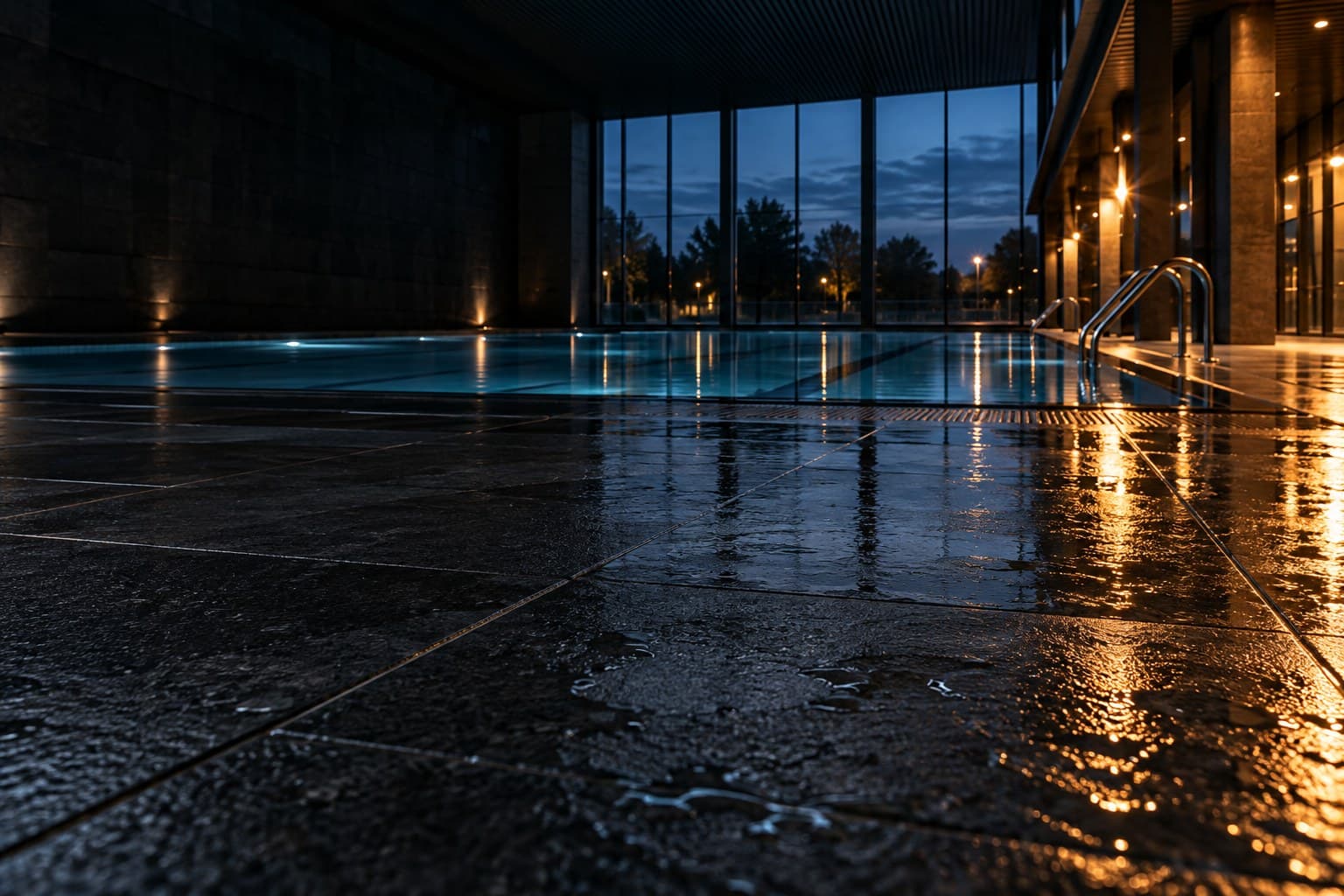
The floor around a pool is the toughest surface in a building: it is wet all day, people walk on it barefoot, and deposits and cleaning product residue build up on the tiles. Under the Polish Building Research Institute (ITB) guidelines, floors in rooms exposed to water should have at least 36 PTV dry and wet. Below we explain how to read pool tile ratings, how to test a pool deck and what to do when it gets slippery.
Why does a pool deck get slippery?
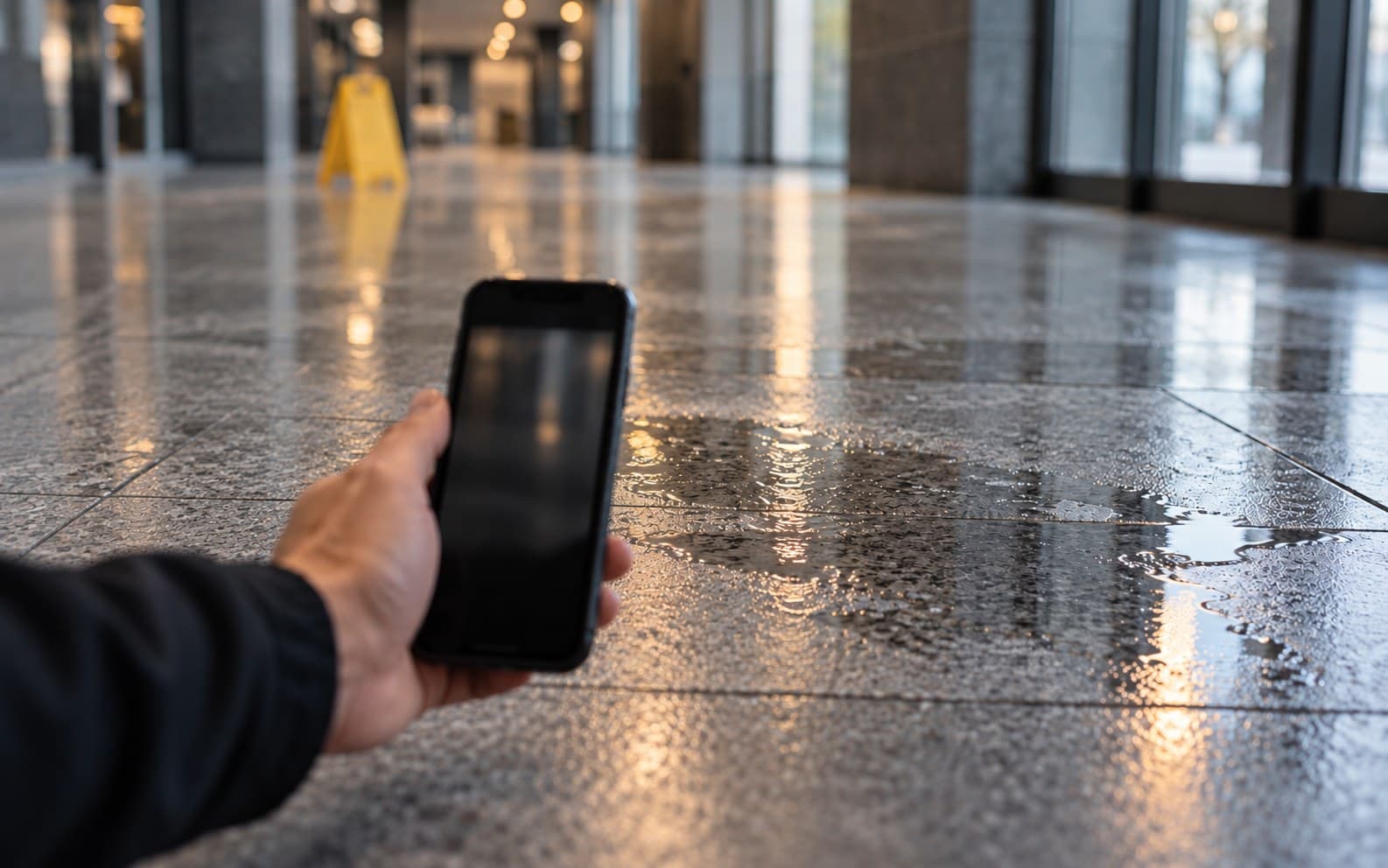
Even well-chosen tiles lose grip over time. On a pool deck they face, all at once:
- water and moisture all day long,
- limescale and salt efflorescence,
- soap and cosmetics residue rinsed off in the showers,
- polymer maintenance coatings and greasy dirt,
- surface wear from heavy foot traffic.
That is why the class in a tile catalogue does not tell you how slippery the floor is after a few years of use. Only an on-site test shows that.
What requirements apply?
- ITB guidelines: at least 36 PTV dry and wet in sanitary rooms and other rooms where the floor is exposed to water. Pendulum testing to PN-EN 13036-4 in public buildings every 5 years.
- Ministry of Investment and Development guide: a wet slip value of no less than 36 PTV throughout the life of the surface, checked at least every 3 years in buildings accessible to people with disabilities.
More on test intervals in How often should floor slip resistance be tested?
Classes A, B and C for barefoot areas
Tiles for barefoot areas are tested in a laboratory with a ramp test to DIN 51097: a barefoot tester walks on a sample wetted with water and detergent while the angle rises until grip is lost.
| Class | Minimum ramp angle | Example areas |
|---|---|---|
| A | 12° | barefoot corridors and changing rooms, mostly dry |
| B | 18° | showers, the pool surround, the floor of shallow non-swimmer areas |
| C | 24° | steps and ramps into the water, disinfection foot baths |
The example areas are indicative, after the German guidelines for barefoot areas. A class describes new material; it does not replace a PTV test of the installed floor. The difference between the scales is explained in PTV vs R9-R13 slip resistance scales.
How is a pool deck tested?
- Test points are chosen by foot traffic: shower exits, the pool surround, steps into the water, the way to the saunas and changing rooms.
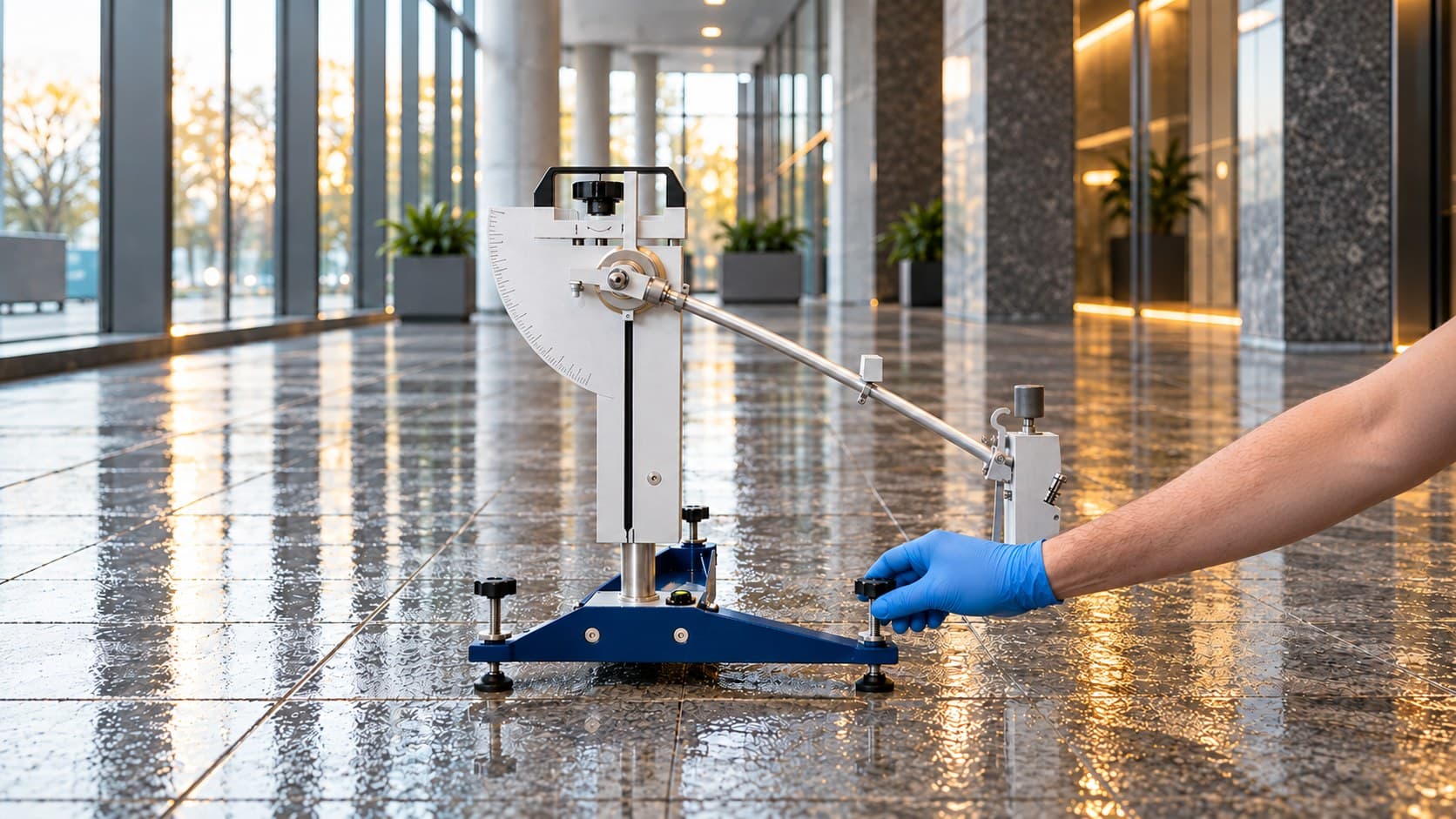
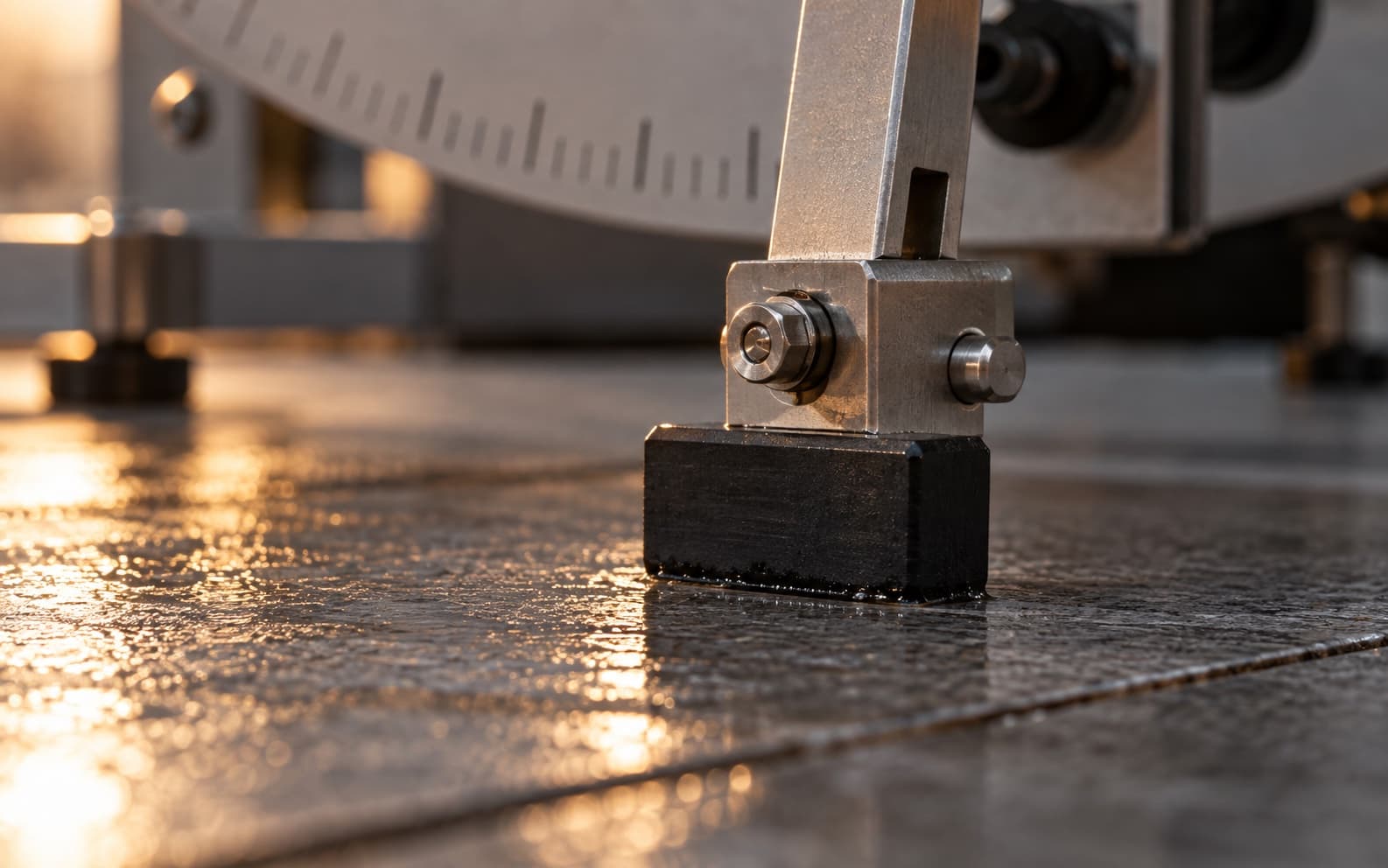
- British pendulum test to PN-EN 13036-4, wet and dry, with a slider suited to bare feet.
- A report with the results and the test conditions, which documents the condition of the floor.
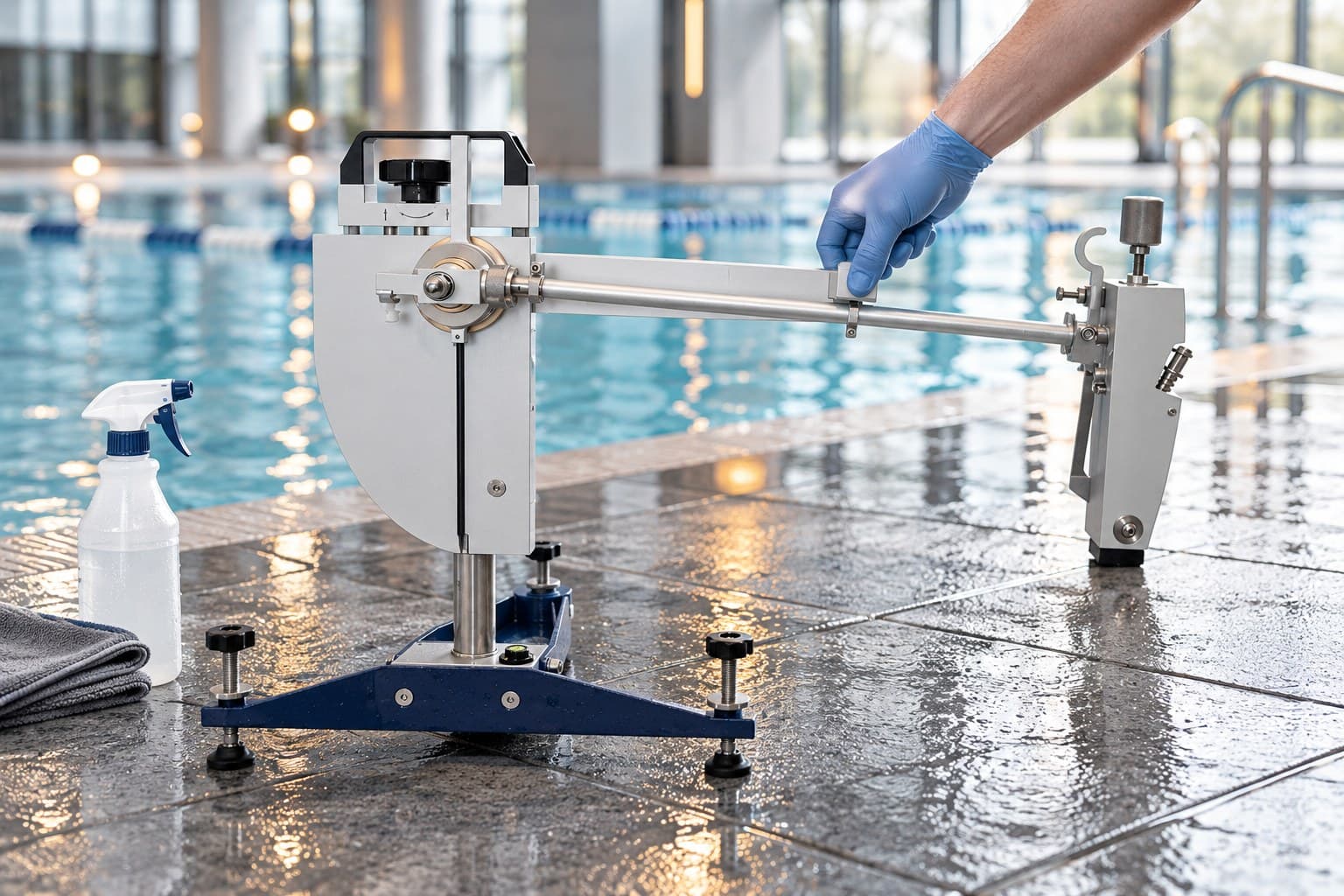
Service details are on the dynamic friction coefficient measurement page.
What to do when the floor is slippery?
- Deep cleaning. We remove limescale, salt efflorescence, soap residue, greasy dirt and old coatings without risk to the tiles - see deep cleaning.
- Anti-slip treatment. We choose the method for the tiles, stone or concrete and the cause of the slipperiness, so the floor grips better and keeps its look - see anti-slip treatment.
- Another PTV test to confirm the effect.
Before every job we carry out a free trial on the building's own floor.
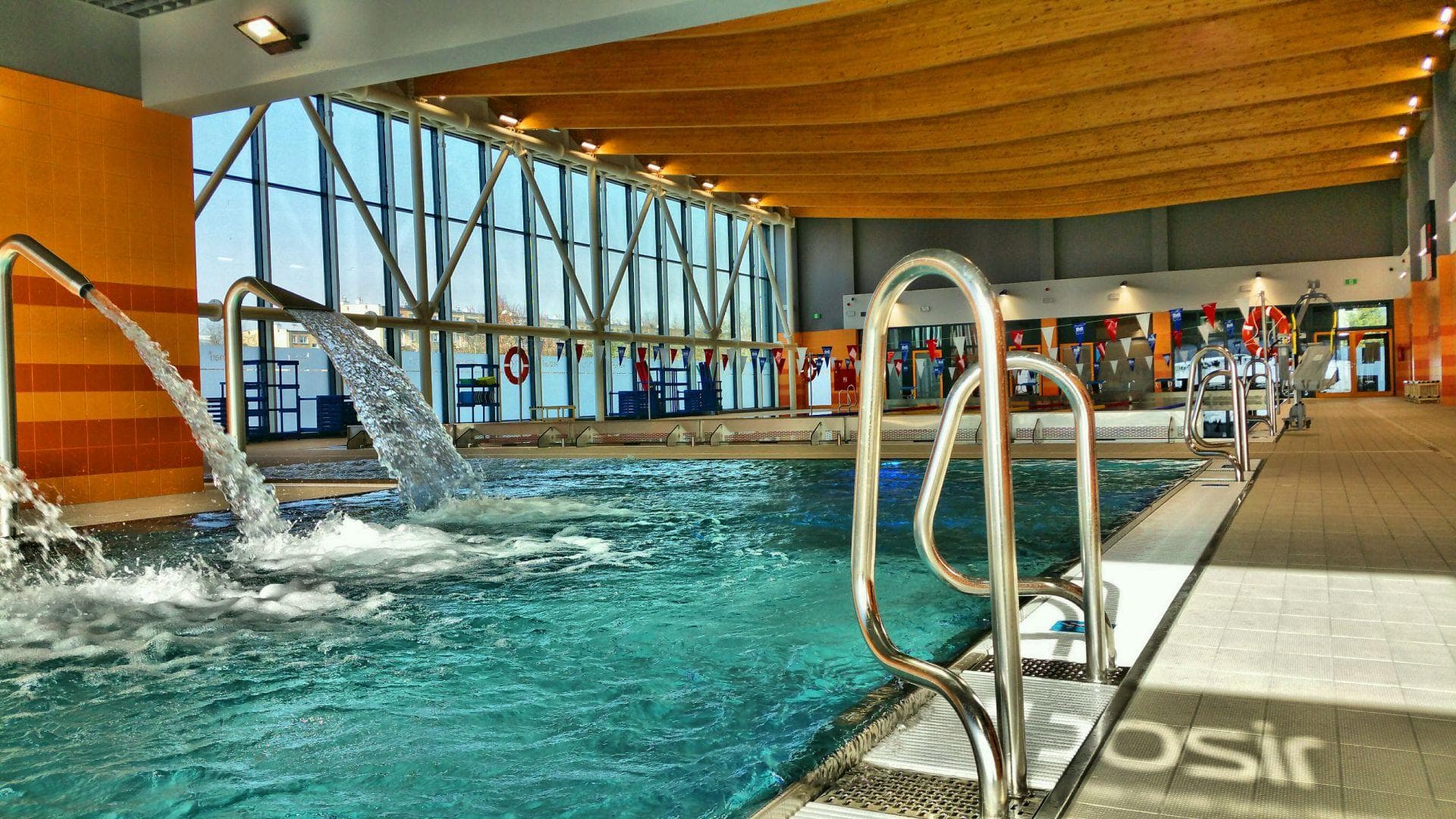
Examples from our projects
- POSiR Poznań - cleaning, sealing and anti-slip treatment of about 800 m² of pool tiles.
- MOSiR Brzeg Dolny - cleaning, sealing and anti-slip treatment of about 850 m² of pool tiles.
- Średzki Water Park - cleaning and anti-slip treatment of about 400 m² of pool deck.
- Trzebnica Zdrój Water Park - cleaning of about 530 m² of pool deck and saunas.
See all projects on the our projects page.
Frequently asked questions
The Polish Building Research Institute (ITB) guidelines require at least 36 PTV dry and wet in rooms where the floor is exposed to water, and in sanitary rooms. The Ministry guide sets a minimum of 36 PTV for wet surfaces.