Key points
- ITB guidelines: in public buildings, floor slip resistance is tested every 5 years.
- Ministry guide: the wet slip value (at least 36 PTV) is checked at least every 3 years in buildings accessible to people with disabilities.
- Test outside the schedule after a refurbishment, a change of cleaning products or use, an anti-slip treatment and any accident.
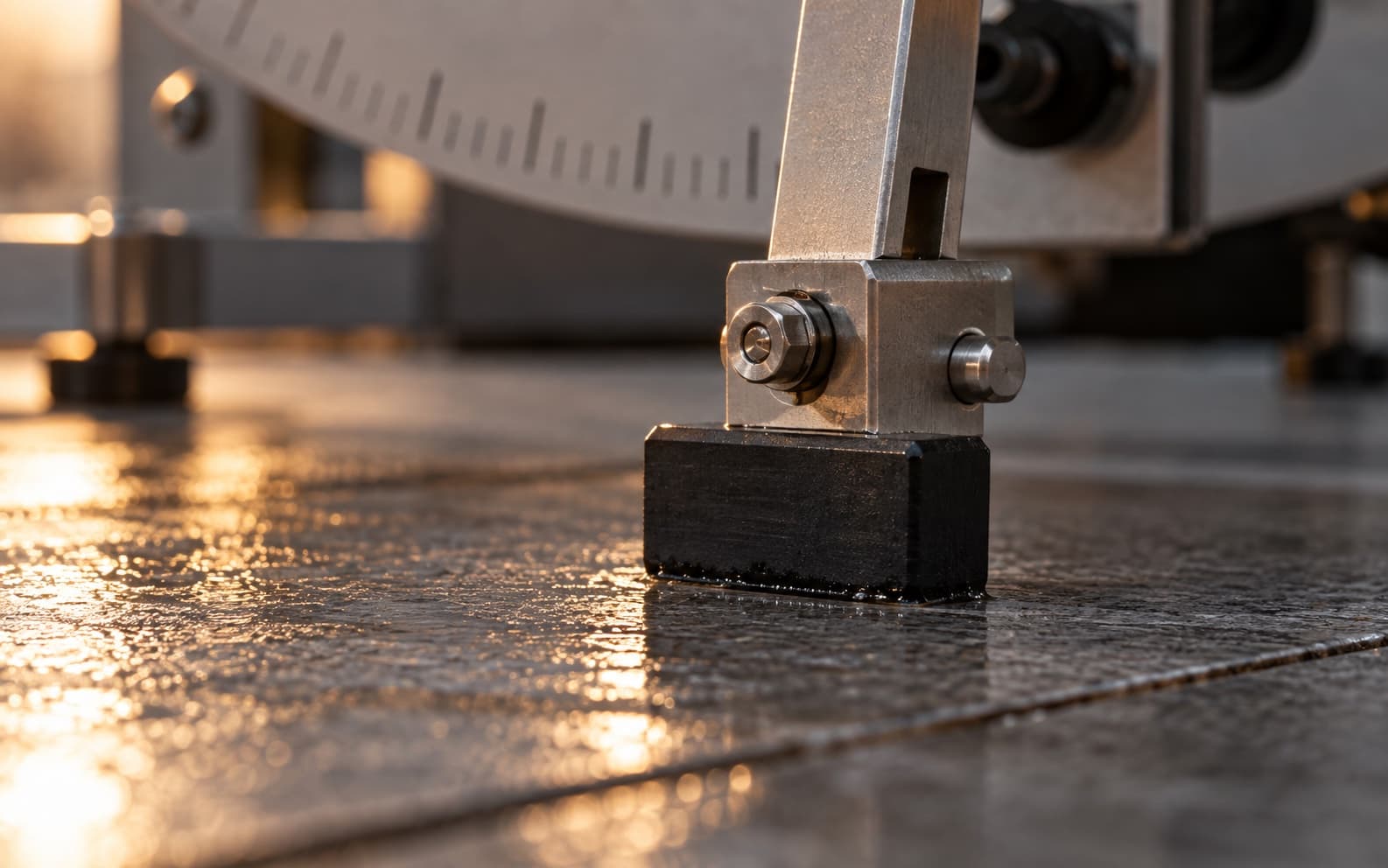
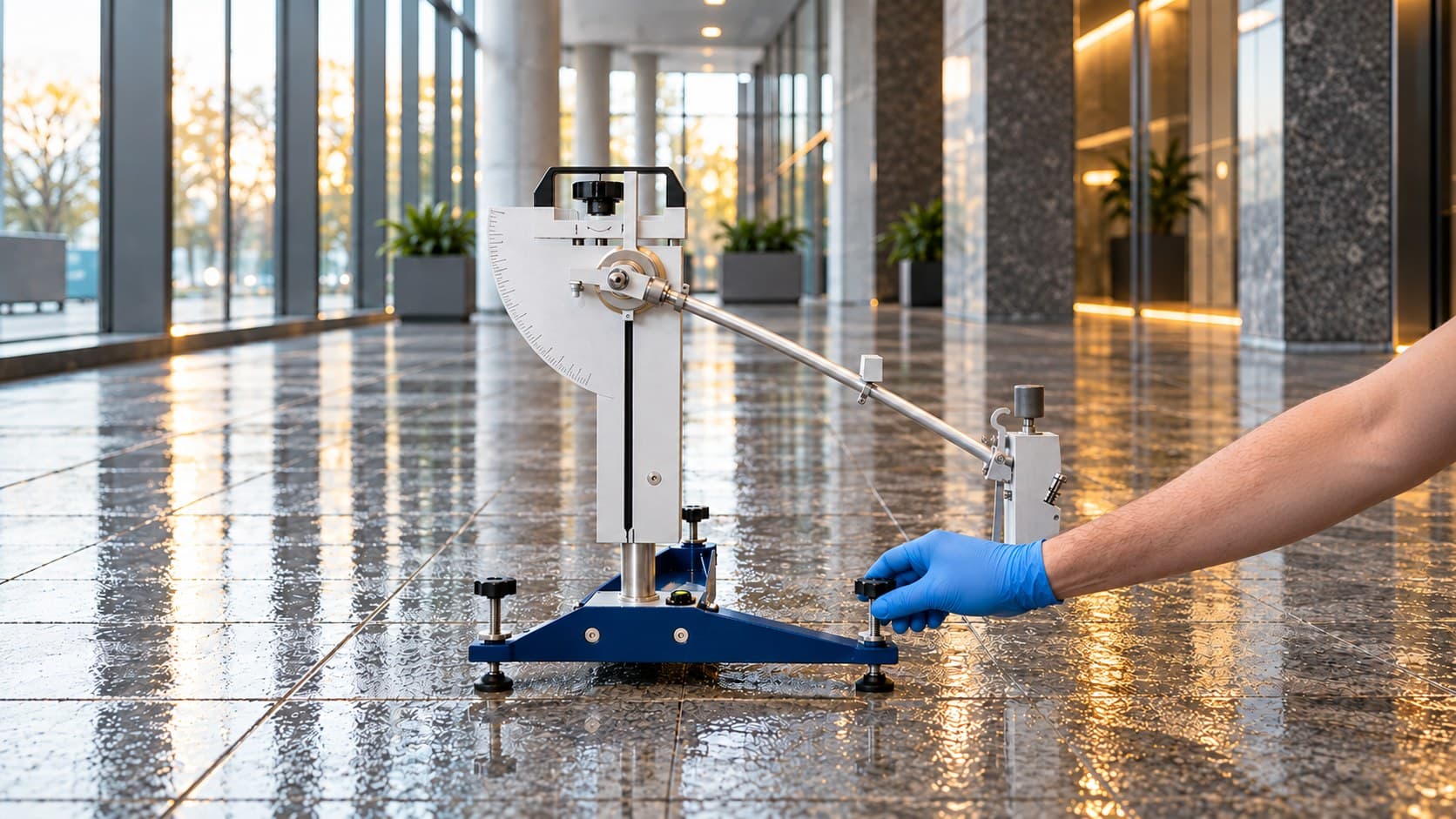
- The test is done with the pendulum to PN-EN 13036-4, dry and wet, and the result goes into a report.
The short answer: every 5 years in public buildings under the Polish Building Research Institute (ITB) guidelines, and at least every 3 years for wet surfaces in buildings accessible to people with disabilities under the Ministry of Investment and Development guide. On top of that come tests outside the schedule, after events that change the floor. Below are the intervals, the required values and how the test works.
Why test a floor regularly?
Every tile loses its factory slip resistance over time and with heavy use. Moisture, dirt, deposits and the way the floor is maintained all affect how slippery it is, and the look of a surface is not enough to judge it. The slip resistance class in a data sheet describes new material in a laboratory - only an on-site test shows the current condition.
What do the regulations and guidelines say?
Construction Law
The owner or manager must ensure the building is safe to use (Art. 5(1)(1)(d)) and have it inspected periodically at least every 5 years (Art. 62(1)). The regulation on technical conditions requires the surfaces of approaches, walkways and floors in rooms intended for people to be made of materials that do not create a risk of slipping (§ 305(1)).
Building Research Institute (ITB) guidelines
In public buildings, floor slip resistance should be tested every 5 years with the pendulum to PN-EN 13036-4. The required values depend on the area:
| Required PTV | Conditions | Where |
|---|---|---|
| at least 36 | dry and wet | entrance areas, walkways, sanitary rooms, retail and service areas, terraces and balconies, rooms exposed to water |
| at least 36 | dry | rooms not exposed to water or rain |
| 80-110 | dry | sports floors |
Ministry of Investment and Development guide
"Design standards for buildings for people with disabilities" (2018) requires the slip value of a wet surface to stay at no less than 36 PTV throughout its life, checked at least every 3 years during technical inspections. This applies to every building that may be used by people with disabilities, older people or parents with pushchairs.
The full overview is on the Knowledge: regulations and PTV page.
When to test outside the schedule?
The regulatory interval is a minimum. Also test slip resistance when:
- you hand over a new floor or finish a refurbishment,
- you change cleaning products or methods - new detergents and maintenance coatings can change how slippery a floor is,
- the use changes - for example a dry area becomes wet, or traffic grows,
- an anti-slip treatment has been applied - the test confirms the effect,
- someone has slipped or had an accident - the result documents the floor's condition,
- a health and safety or technical inspection is coming up.
How does the test work?
- Agreeing the test points - chosen for the building: entrances, walkways, sanitary rooms, wet areas.
- British pendulum test to PN-EN 13036-4, dry and wet. The slider is chosen for how the floor is used (in shoes or barefoot).
- A report with the results and a description of the test conditions.
- Going through the results and next steps.
More on the method and reading the result in PTV vs R9-R13 slip resistance scales and on the dynamic friction coefficient measurement page.
What if the result is too low?
A result below 36 PTV is a signal to act before an accident happens. The usual steps are:
- deep cleaning to remove deposits, greasy dirt and old maintenance coatings that can reduce grip - see deep cleaning,
- anti-slip treatment with a method chosen for the material and the cause of slipping, keeping the look of tiles or stone - see anti-slip treatment,
- another test, which confirms the effect and goes into the building's records.
Frequently asked questions
Owners and managers in Poland must ensure a building is safe to use and inspect it at least every 5 years (Construction Law, Art. 5 and Art. 62). The Building Research Institute (ITB) guidelines call for testing floor slip resistance in public buildings every 5 years.