Key points
- The burden of proof is on the injured person: they must show the slippery surface, the harm and the link between them.
- The first hours matter most: CCTV footage, photos of the spot, witnesses' details and reporting the incident to staff.
- Medical records and receipts for medicines, rehabilitation and travel determine the size of the claim.
- A slip resistance (PTV) test shows objectively how slippery the floor was.
After a fall on a slippery floor, the most important thing is to gather evidence. It is the injured person, as the one seeking compensation, who must show that the accident was caused by a poorly maintained surface and that it led to an injury or loss (Article 6 of the Polish Civil Code). Every piece of evidence about the circumstances matters, and some of it can disappear within days. Here is a checklist. This article describes the legal position in Poland.
Step by step, right after the fall
- Look after your health. If you are injured, medical help comes first.
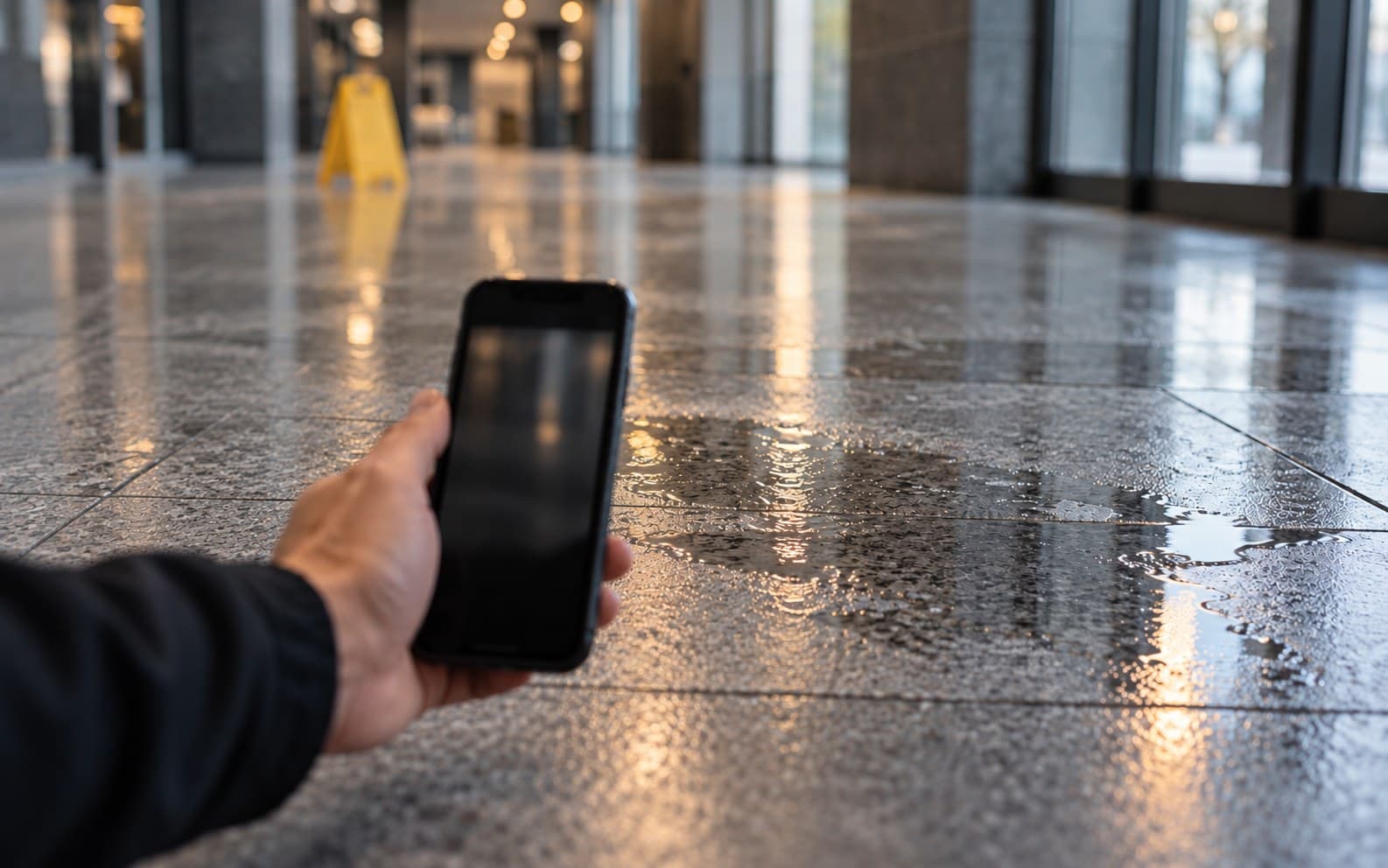
- Photograph the spot. A wet patch, a spill, no warning sign, a damaged tile - photos and a short video from several angles.
- Collect witnesses' details. Name and phone number, ideally a short written statement.
- Report the incident to staff. An employee, shift manager or security will confirm that it happened.
- Ask for the CCTV footage to be preserved. In writing and straight away.
- Keep medical records and receipts. From the first visit to rehabilitation.
- Identify who is responsible for the floor - see Who is liable for a slippery floor?
CCTV footage
Check whether the spot was covered by CCTV and whether it was working. If so, ask the operator as soon as possible to preserve and release the footage from the day and time of the incident. Footage is the most reliable evidence, because it shows the whole event in real time. CCTV systems often overwrite recordings after a few days, so do not delay.
Photos and videos of the scene
Your own photos and videos help establish the cause of the fall. They should clearly show what was wrong with the surface: a wet or dirty floor, a missing warning sign, damage. Also take a wider shot showing where in the building it happened.
Witnesses
Look for direct witnesses and ask for their contact details. Their testimony is often decisive when claiming compensation. You can also ask them for a written statement describing the accident.
If there are no witnesses, recordings or photos, tell a third party who is not involved in the dispute straight after the accident: a shop assistant, a security guard in a shopping centre, a municipal guard. That makes the incident credible, and that person can later confirm it as a witness.
Medical records and costs
If the injury needed a doctor or a hospital, keep all the medical records. They are key evidence for the amount of compensation and confirm the costs incurred, such as rehabilitation. Keep receipts and invoices for medicines and for travel to medical appointments as well.
Testing the floor's slip resistance
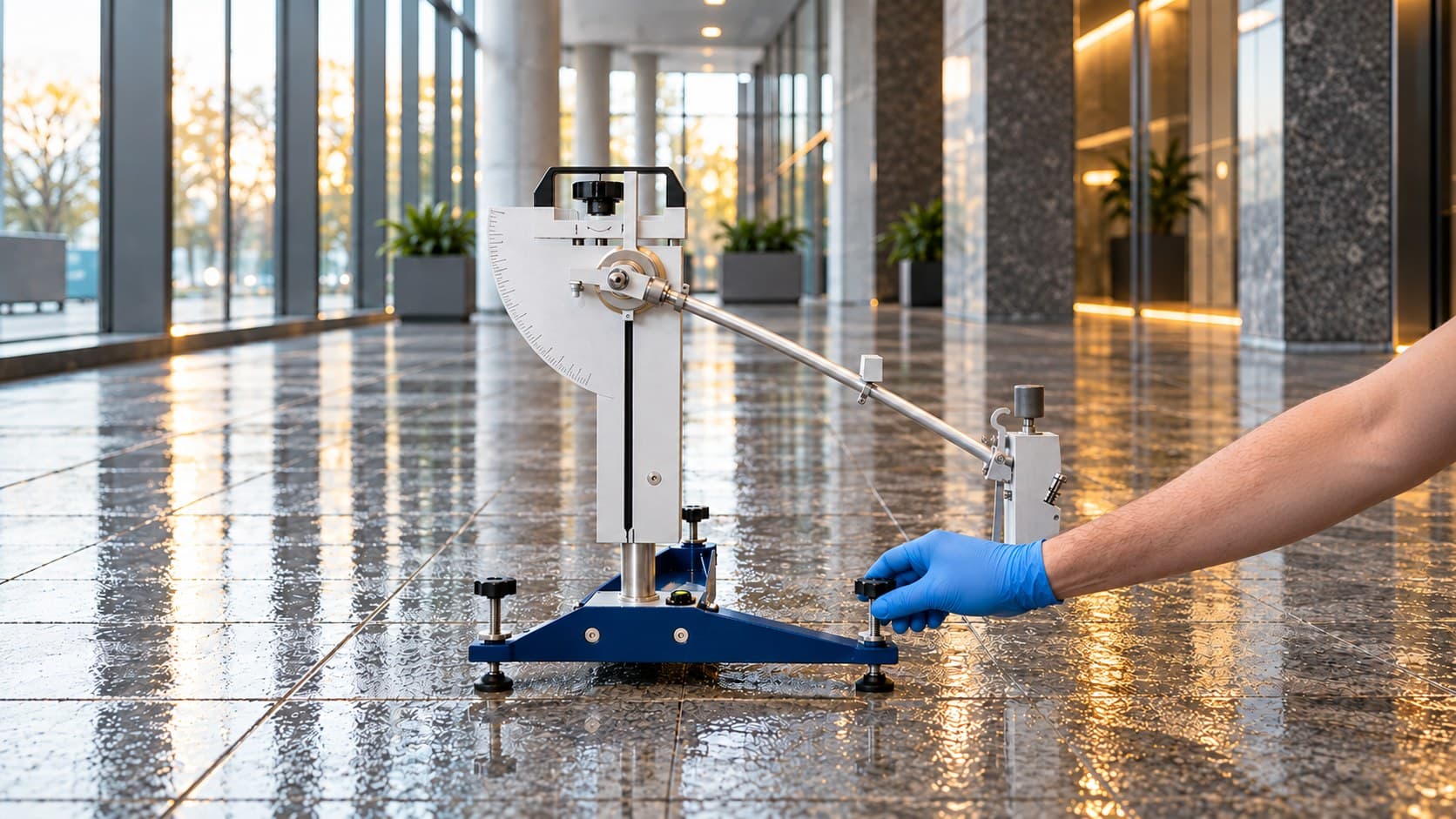
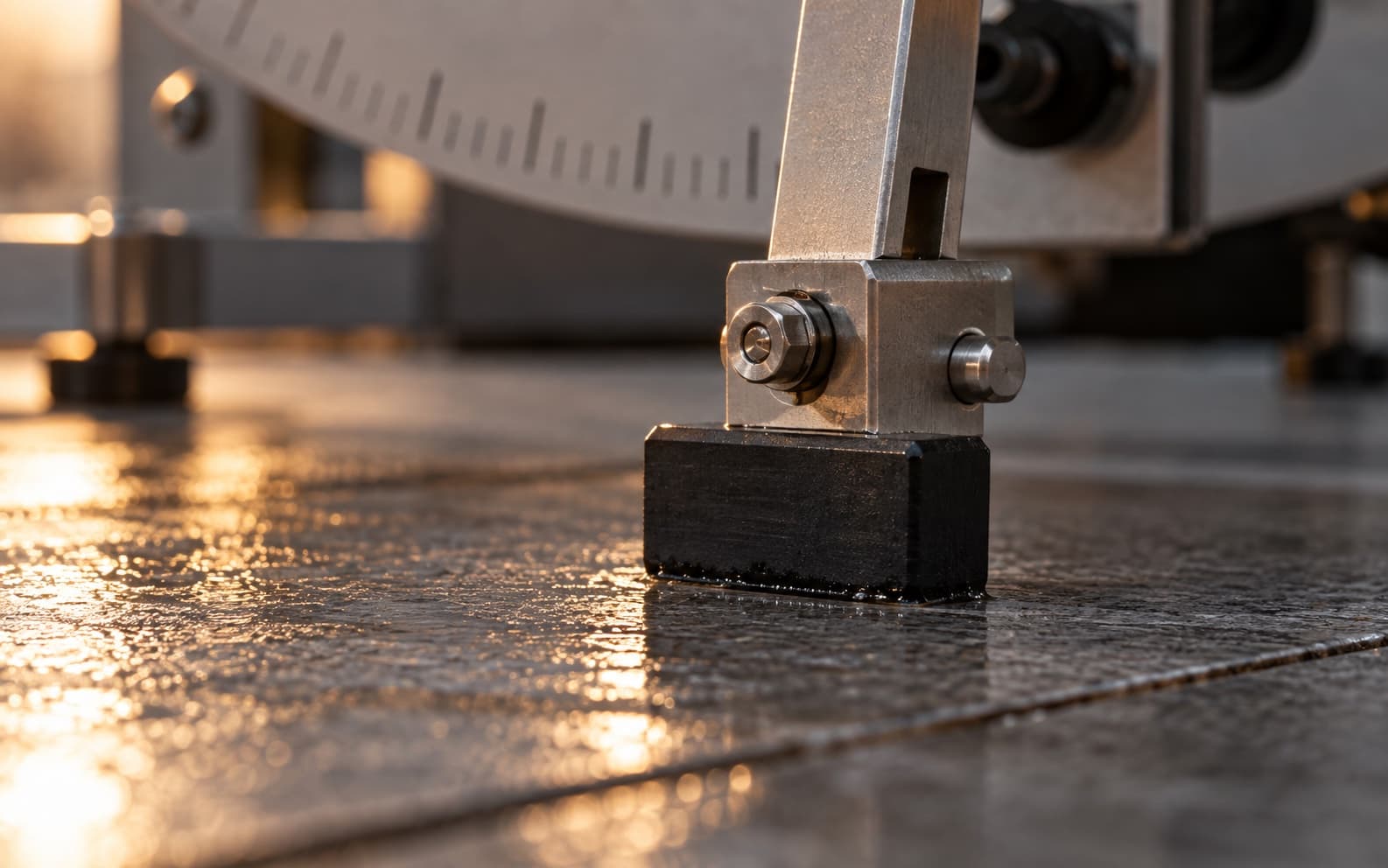
Supporting evidence can also come from testing the technical condition of the floor where the incident happened. A British pendulum test to PN-EN 13036-4 gives a PTV that can be compared with the guidelines: the Polish Building Research Institute (ITB) requires at least 36 PTV in entrance areas, walkways and sanitary rooms, among others. The National Labour Inspectorate recommends the pendulum test, including in accident investigations, because it answers the question of how slippery the floor is when someone walks on it.
We carry out this test too - see dynamic friction coefficient measurement.
How much time do you have?
A tort claim becomes time-barred 3 years from the day the injured person learned of the damage and of the person liable, and no later than 10 years after the event (Article 442¹ of the Polish Civil Code). Still, collect evidence from day one: recordings and traces at the scene disappear fastest.
Note
The information above is general and is not legal advice. If you need help with a particular case, contact a lawyer.
Frequently asked questions
Get medical help first, then, if you can, photograph the spot and the cause of the fall, ask witnesses for their contact details, report the incident to staff or security and ask for the CCTV footage to be preserved.